Behind the scenes of the first ECLAT GPU hackathon
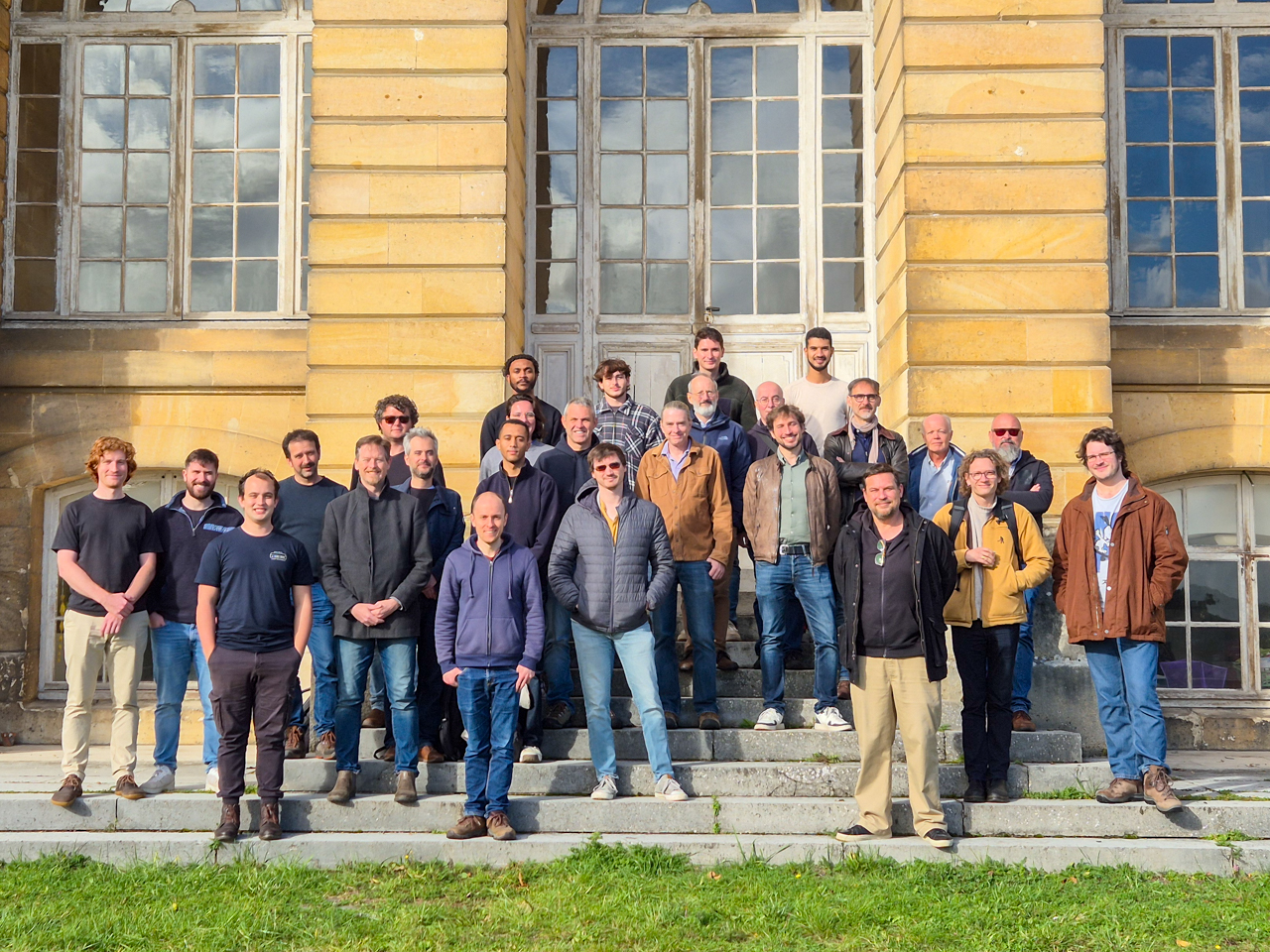
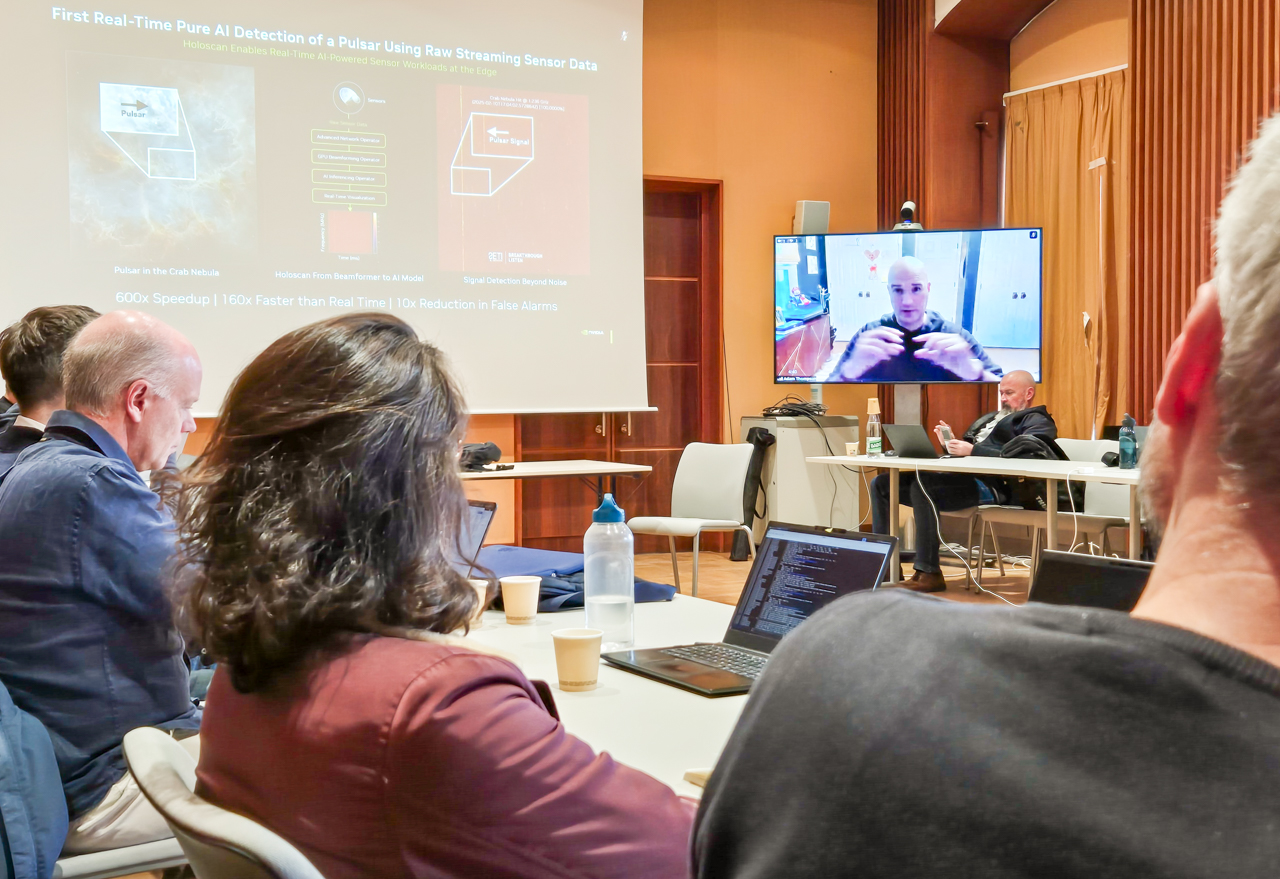
Held from October 20 to 24, 2025 at the Observatoire de Paris-PSL, the first ECLAT GPU hackathon marked an important step towards meeting the challenge of the coming data deluge, by officially launching a new international initiative to accelerate data flows using GPU technology. The event brought together a large community of experts, including researchers and engineers from NVIDIA, INAF and Breakthrough Listen, who teamed up with ECLAT partners to explore the next generation of computing strategies.
Building the future of astronomy computing: behind the scenes at the first ECLAT GPU hackathon
Meeting the challenge of the data and workflow deluge
The sheer volume of scientific data generated by future research infrastructures is only part of the problem. Astronomers are also faced with increasingly complex data processing pipelines, which have to convert continuous and voluminous data streams into reliable results for scientific exploitation. Managing the scale and complexity of these workflows requires new approaches.
Why GPUs are the preferred solution
GPUs are the perfect answer to these challenges. Many astronomical workflow components are limited by memory bandwidth, but the high-bandwidth memory architecture of modern GPU processors is designed to overcome this limitation. They also offer massive parallel processing, ideal for efficiently handling continuous data flows. What’s more, the rapid rise of AI in scientific and industrial fields makes GPU-based infrastructures particularly valuable, as they provide the computing infrastructure needed to integrate machine learning methods into next-generation data reduction strategies. Not to mention that GPUs are also energy-efficient, processing more data per unit of energy used. In view of global warming, their deployment will be an urgent necessity.
Launch of a close collaboration
The hackathon marked the kick-off of a wider collaboration that brings together ECLAT’s partners with NVIDIA, INAF, Breakthrough Listen and SARAO. This gathering enabled these organizations to work together and promote exchanges. One of the main aims of the event was to lay the foundations for long-term joint development. Much of the work has focused on standardizing interfaces, coding practices and, above all, data structures, as these are essential to the effective implementation of data flow reduction. The way in which data flows are represented and organized is a decisive factor in the performance of GPU-accelerated pipelines. It was therefore essential to reach a common understanding on this subject before embarking on more advanced optimization and integration work.
An essential contribution from industrial partners
The presence of industrial partners was essential. Eviden and NVIDIA are hardware suppliers whose expertise in hardware-software co-design is crucial. Efficient astronomical workflows increasingly depend on jointly designed systems in both fields, and such cooperation can only be achieved when research teams and industrial experts work closely together.
The first ECLAT GPU hackathon laid the foundations for a sustained international effort to develop the next generation of astronomical data processing pipelines.