News and Events
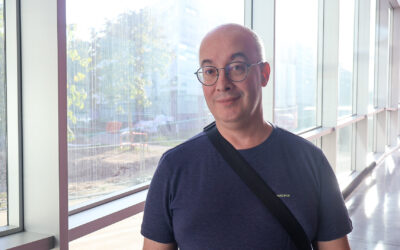
« Radio astronomy gives us a use case that forces us to rethink how computations are executed » – Interview with Olivier Aumage, researcher at Inria
How can we make better use of supercomputing power to meet the challenges of radio astronomy? Olivier Aumage, researcher at Inria Bordeaux, presents a new project developed with ECLAT to optimise execution, reduce idle time and prepare software for the data volumes...
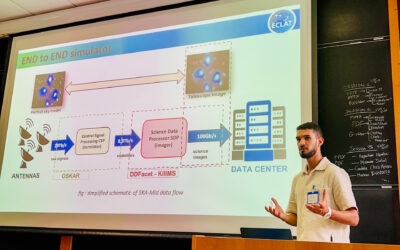
From Morocco to Oxford, Marwane Dalal is building bridges around the SKA
As a PhD student at the ECLAT laboratory, Marwane Dalal is developing a digital twin of the SKA at the interface between radio astronomy and high-performance computing. From his presentation to the Moroccan Academy of Sciences to the YERAC conference in Oxford, his...

Webinar : EXTRACT – towards a digital computing platform for modern radio astronomy
EXTRACT - towards a digital computing platform for modern radio astronomyThe EXTRACT project aims to design a distributed data-mining software platform for extreme data across a continuum of computing resources, including edge devices, cloud systems, and...
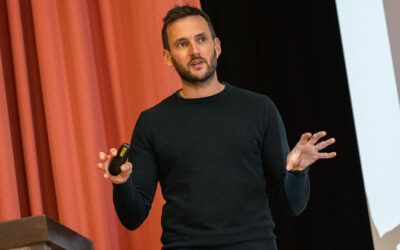
“With ECLAT, we work in direct contact with scientific application developers”
Interview with François Tessier,
How can high-performance computing keep pace with the data challenges of next-generation radio astronomy? In this interview, François Tessier, Inria researcher and I/O specialist, explains how ECLAT provides a rare opportunity to work directly with scientific...
SKAO: the French astrophysics community is rallying behind the world’s largest radio observatory
PRESS RELEASE - Tuesday 26 May 2026 SKAO: the French astrophysics community is rallying behind the world’s largest radio observatoryA three-day conference to prepare French astronomy for the Square Kilometre Array eraFrom 19 to 21 May, the French astrophysics...
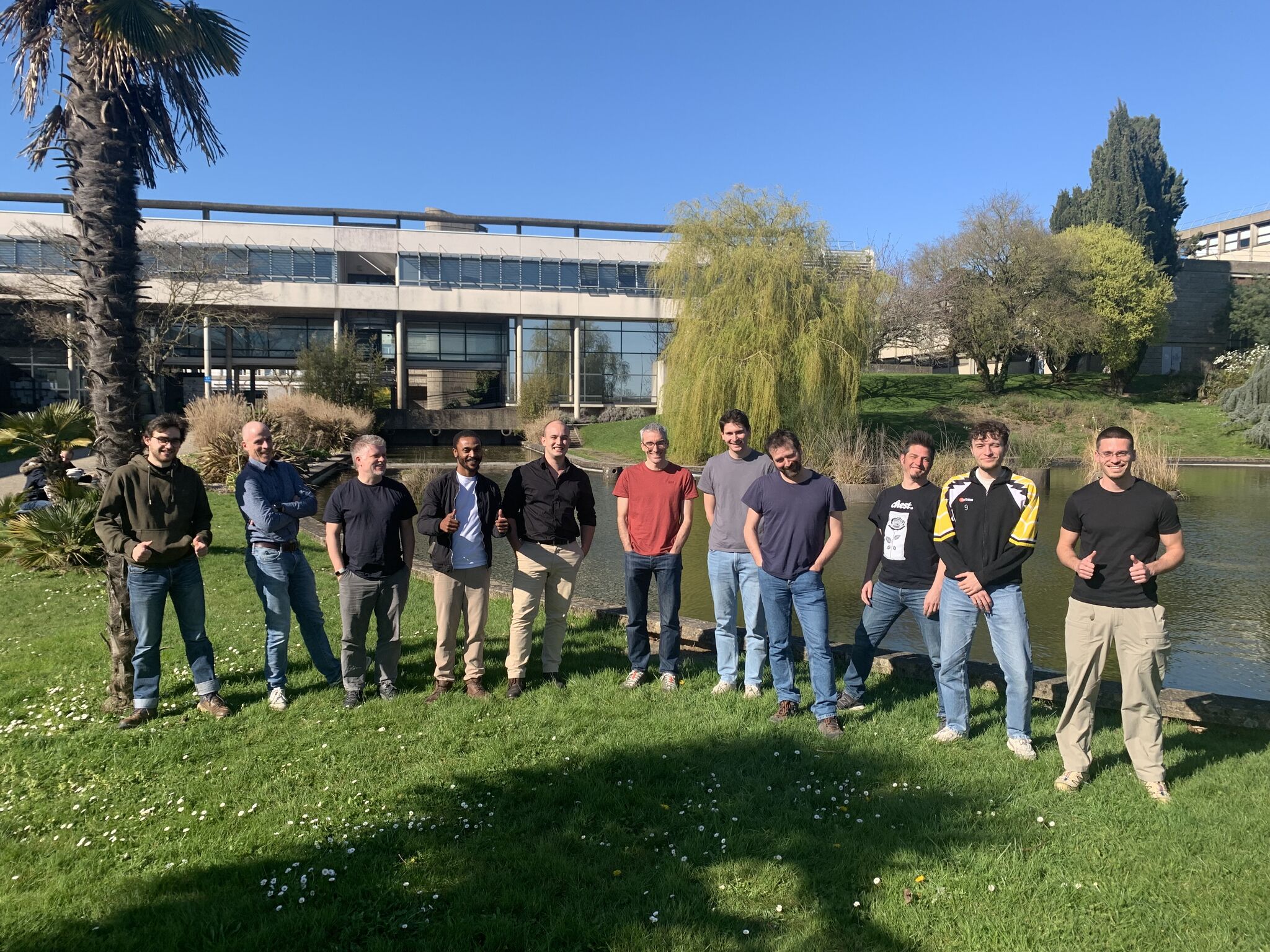
International hackathon in Rennes on DDFacet and RIMS
For a week in March, IRISA in Rennes hosted a hackathon bringing together around ten researchers, engineers and PhD students from France, South Africa and the United Kingdom. The event focused on two main areas: improving the DDF Pipeline radio astronomy imaging...