The ECLAT joint laboratory
Uncovering the mysteries of the universe using HPC and AI
ECLAT : Extreme Computing Lab for Astronomical Telescopes
Our mission
A centre of excellence in HPC and AI for astronomical instrumentation
ECLAT is the laboratory dedicated to High-Performance Computing (HPC) and Artificial Intelligence (AI) for astronomical instrumentation, stemming from the French contribution to the SKAO (Square Kilometer Array Observatory). Its mission is to facilitate the R&D partnerships needed to design and build future cyber-physical systems for astronomy.
Photo : NASA
The partners
A joint laboratory
Laboratories and teams
Researchers and engineers
Common roadmap
ECLAT is a nationwide collaborative laboratory based on close partnerships and large-scale initiatives at national and European level. It combines the efforts of sixteen laboratories and teams affiliated to the CNRS, Inria, Eviden, the Observatoire de la Côte d’Azur and the Observatoire de Paris.

Photo : Oeil de verre / Flickr
Research areas
Pushing the limits of innovation
Design of supercomputers

Research & development

Instrumentation for radio astronomy

Contributions to SKAO
News and Events
Follow us

Webinar : EXTRACT – towards a digital computing platform for modern radio astronomy
EXTRACT - towards a digital computing platform for modern radio astronomyThe EXTRACT project aims to design a distributed data-mining software platform for extreme data across a continuum of computing resources, including edge devices, cloud systems, and...
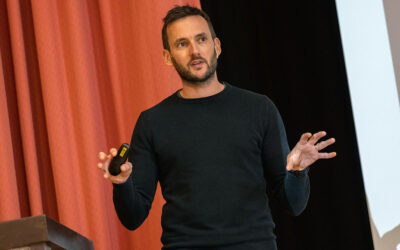
“With ECLAT, we work in direct contact with scientific application developers”
Interview with François Tessier,
How can high-performance computing keep pace with the data challenges of next-generation radio astronomy? In this interview, François Tessier, Inria researcher and I/O specialist, explains how ECLAT provides a rare opportunity to work directly with scientific...
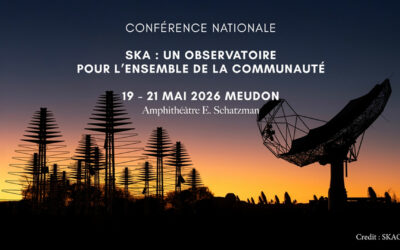
SKAO: the French astrophysics community is rallying behind the world’s largest radio observatory
PRESS RELEASE - Tuesday 26 May 2026 SKAO: the French astrophysics community is rallying behind the world’s largest radio observatoryA three-day conference to prepare French astronomy for the Square Kilometre Array eraFrom 19 to 21 May, the French astrophysics...
Projects and collaborations
The synergies around ECLAT
Photo: ECLAT 2024 technical workshop participants
SEAMS
Upstream R&D project on new frugal technologies for intensive computing
STREAMS
Platform for integrating new HPC and AI technologies
Rising Stars
International network on cyber-physical systems under real-time constraints
Numpex
Numpex brings together 5 projects focusing on Exascale

ODISSEE
Coping with the deluge of data from SKAO and CERN HL-LHC using AI
Want to learn more?
Find out how you can contribute to innovation in astronomical research with ECLAT. Explore our pioneering projects and international collaborations to push back the frontiers of modern astronomy.