From HPC to astronomy: the journey of Ophélie Renaud
Ophélie Renaud, a postdoctoral researcher in high-performance computing, simulates the behavior of algorithms for the future SKAO giant telescope. Her objective? To anticipate the technical challenges associated with the explosion of astronomical data and optimise computer architectures. Between HPC, astronomy and gender equality issues, she shares her journey and advice to inspire future female researchers.
Interview with Ophélie Renaud, postdoctoral researcher at SATIE
Jacques: Hello Ophélie! Can you introduce yourself?
Ophélie: Hello! My name is Ophélie Renaud. I am currently doing postdoctoral research at the SATIE laboratory in Paris-Saclay. I am also affiliated with IRISA in Rennes and ENS Rennes. My work consists of simulating the behavior of algorithms that will be deployed on the SKAO (Square Kilometre Array Observatory). I am trying to anticipate the behavior of image data processing pipelines. We want to know if the algorithms will work on these computer architectures currently under development. This will enable us to help astronomers and engineers co-design future computing systems and algorithms.
Can you explain what a pipeline is?
A pipeline is a series of algorithms that processes data from antennas. At the input, we have raw data, correlation points, volts, and with these correlation points we generate an image of the sky at the output.
My role is to compare the behavior of these algorithms. The more antennas we add, the more the volume of data explodes. However, high-performance computing systems, or HPC systems, have physical constraints: we can’t load infinite amounts of data into memory. So I look for solutions and evaluate their ability to scale, which is called scalability.
In concrete terms, you check that the processing is running correctly from start to finish?
Exactly. I see pipelines as “black boxes.” I simulate their behavior to identify bottlenecks. These are the moments when the machine slows down due to a lack of resources, sometimes with a risk of memory crash.
I don’t modify the algorithms themselves. Instead, I test different architectures: number of nodes, CPUs, GPUs, etc., based on SKAO’s objectives. Since these infrastructures don’t yet exist on this scale, we use a simulation tool called SimSDP, which allows us to extrapolate from more modest prototypes.
« I test different architectures: number of nodes, CPUs, GPUs, etc., based on SKAO’s objectives. »
« Astronomy came as a bit of a surprise, but it’s an ideal case study when you’re interested in the future of HPC. »
SimSDP, actually, can you tell us more about it?
SimSDP is an open-source tool that can simulate HPC infrastructures with virtually any algorithm. It’s really at the heart of our collaborative work. I test different combinations of algorithms and architectures to identify the most relevant configuration for the future SKAO.
I actually come from the world of HPC. I studied electronic engineering at INSA, then did a thesis during which I participated in the development of this simulator. Astronomy came as a bit of a surprise, but it’s an ideal case study when you’re interested in the future of high-performance computing, our sandbox as Matthis said!
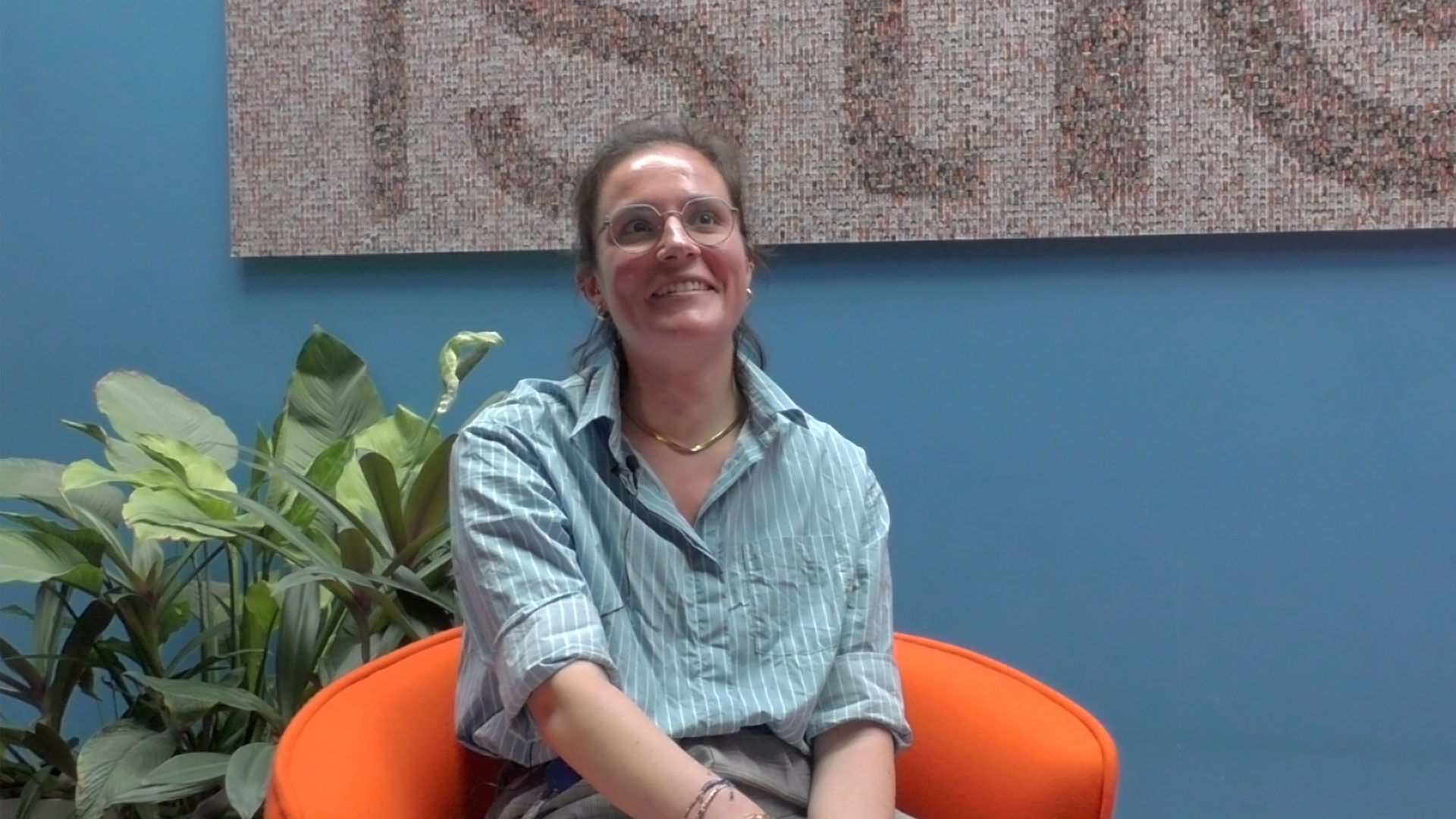
The HPC environment is known for being very male-dominated. Is it difficult to work in this field as a woman?
It’s definitely an issue! But I’ve spent my entire career in predominantly male environments, so it’s part of my everyday life. That said, I’m often the only woman in this field, so people come up to talk to me more. Being a bit of a curiosity helps break the ice.
On the other hand, I’ve noticed that fewer and fewer women are being recruited. The reform of mathematics in high school has a lot to do with this: asking students to choose very early on whether or not to continue with math statistically reduces the number of young girls who go on to engineering schools.
« I’m often the only woman, so people come up to talk to me more. »
« But as soon as you start coding, everything changes: the work becomes really exciting. »
What would you say to a young girl who is hesitating to embark on a thesis in your field?
First and foremost, I would tell her not to close any doors. A thesis really helps you to mature and take a step back from what you’re actually doing. It’s also the easiest option… you stay at school and get paid to learn!
It’s also important to know that perseverance is essential. The first year is often the most difficult: you discover the academic world and go through an intense bibliography phase. Reading dozens of scientific articles is not always something you are prepared for in engineering school, and it can be discouraging.
But as soon as you start coding and comparing your results with existing ones, everything changes: the work becomes really exciting. Finally, I would advise against isolating yourself. Laboratory life also involves discussions over coffee, informal exchanges that help solve problems, and hackathons, which are a great way to discover new tools and make concrete progress on your projects.