Development of a workflow for radio-interferometric imaging in the exascale era
As radio astronomy enters the exascale era, the ECLAT laboratory is working on the workflows of tomorrow. Gathered in Meudon for a hackathon and technical workshop, researchers and industrial partners accelerated the development of a prototype “end-to-end” processing chain, capable of transforming massive streams of radio signals into usable scientific images, in prefiguration of the challenges posed by the future SKA.
ECLAT mobilised to meet the challenges of exascale computing
Hackathon and technical workshop: ECLAT accelerates its roadmap
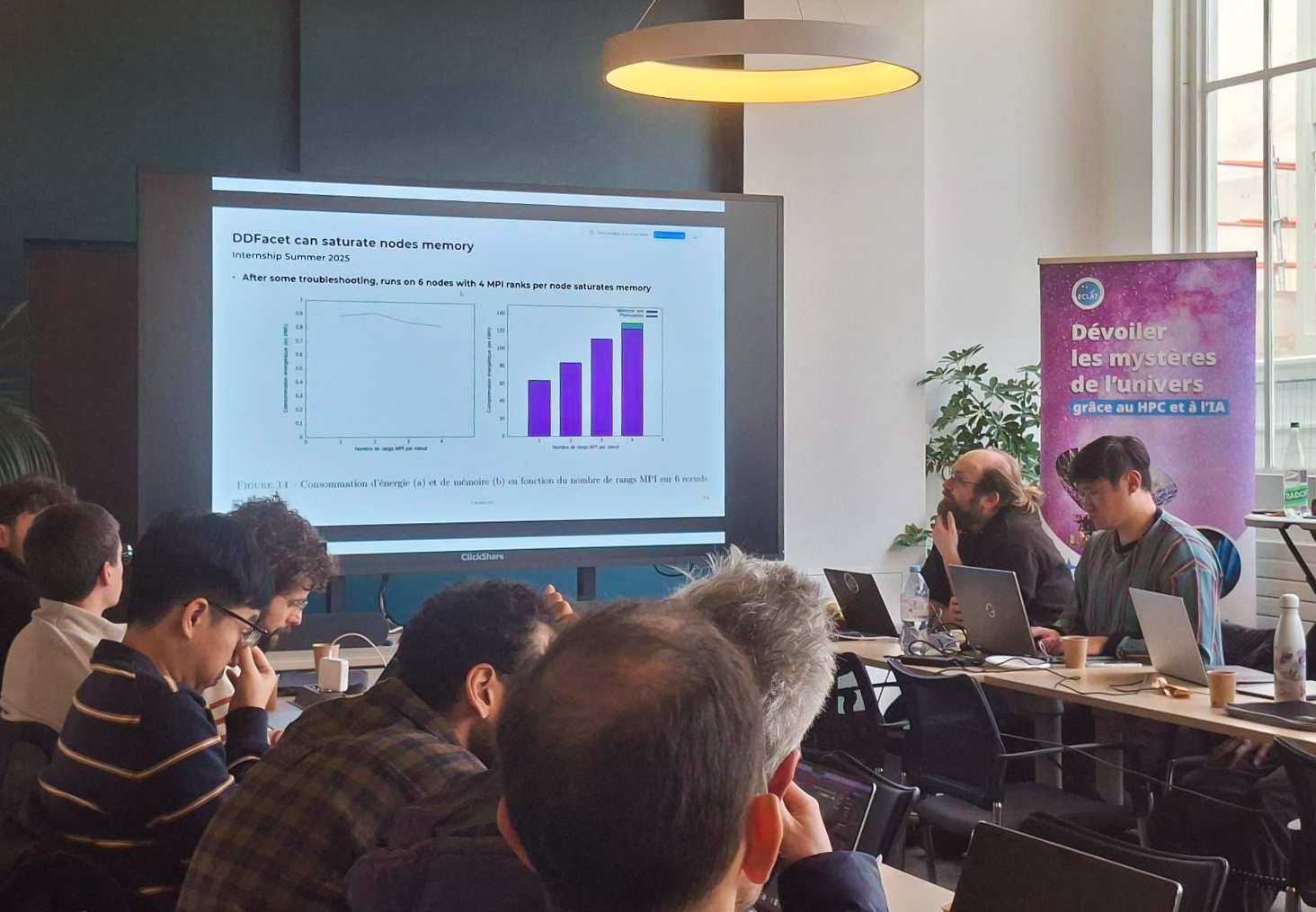
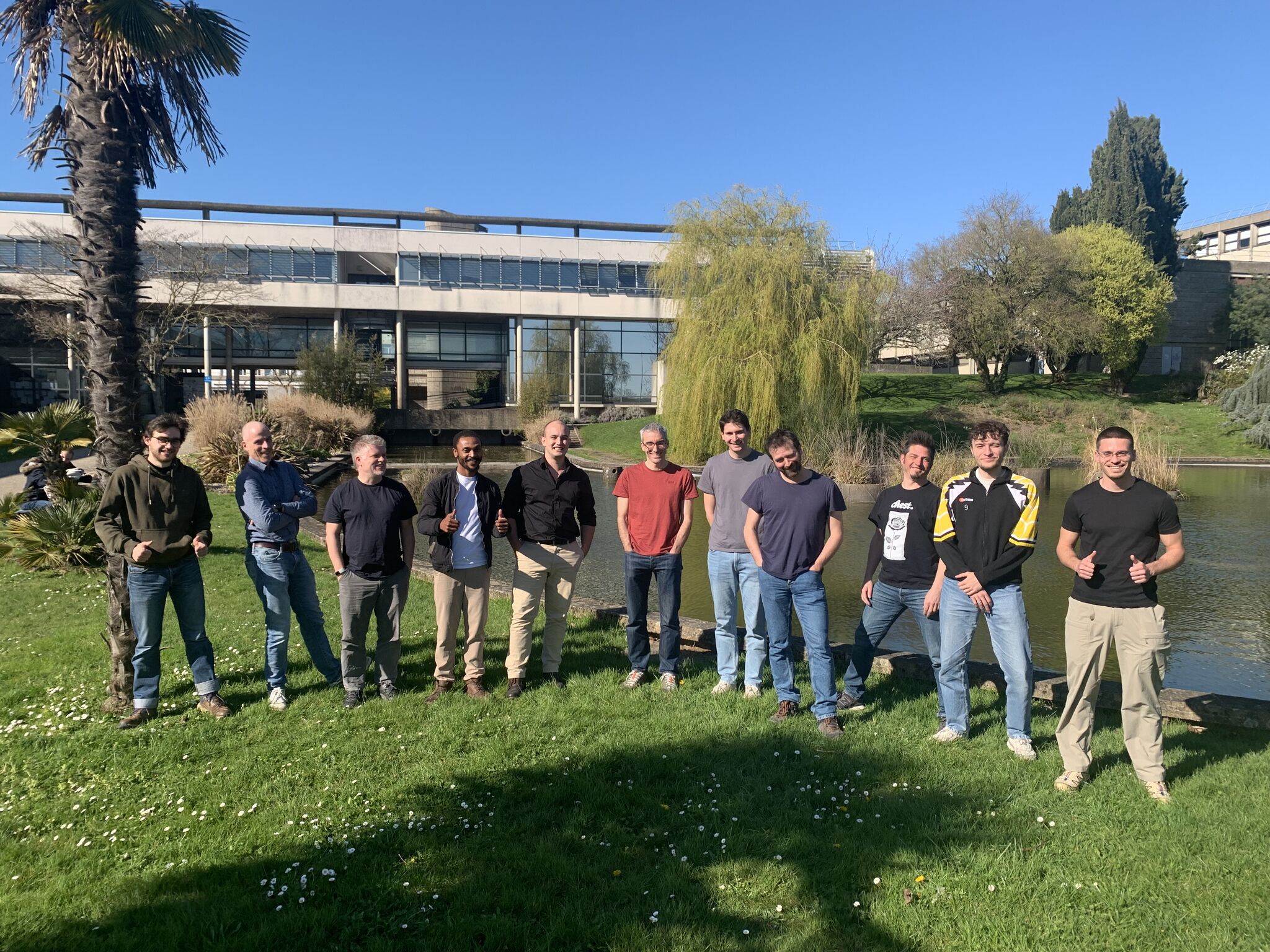
From December 2 to 5, 2025, members of the ECLAT laboratory met at the CNRS premises in Meudon for a hackathon followed by a technical workshop dedicated to one of its major objectives: the development of a prototype workflow designed for exascale radio astronomy, prefiguring that which will be used by SKAO.
This prototype is representative of an end-to-end workflow generating synthetic data on the scale of what will be produced by an interferometer like the SKA, from raw signals from antennas to scientifically usable images of celestial objects. In this way, the laboratory aims to develop solutions for each component of the workflow, while reflecting on the entire chain.

A concrete case study to guide technical choices
To develop this prototype, the ECLAT teams are relying in particular on the DDFacet (DDF) application, used as a concrete case study for the critical stages of the pipeline. Ultimately, this work will provide an essential tool for guiding technological choices and anticipating the user experience.
One of the highlights of the week was the organisation ofa hackathon in collaboration with industrial partners DDN, Eviden and SiPearl. “Their active participation considerably accelerated the prototype’s development, and enabled us to test certain workflow bricks within their technological environments”, emphasizes Damien Gratadour, Director of ECLAT. This collaboration enables a finer integration between scientific needs and industrial solutions.
“The active participation of DDN, Eviden and SiPearl considerably accelerated the development of the prototype.
The technical workshop presentations also highlighted the need to guarantee homogeneous processing throughout the chain, by developing specific solutions to meet the challenges of transporting, managing and storing very large volumes of data. Questions around standardization and optimal use of resources were regularly at the heart of these discussions, at a time when technological choices are beginning to crystallize for the SKA and for the large-scale computing infrastructures to which the community will have access for its scientific exploitation.